Business Process Automations
Automating the busywork
Long before AI agents, I was the person who couldn’t leave a repetitive task alone. Community programs grow faster than the teams that run them: more applications, more certificates, more follow-ups, more spreadsheets. Most of that work is the same few steps repeated by hand, and every manual step is a chance for a typo, a missed email or a stale record.
So wherever I worked, I automated it: first to give the team its time back, and second so the data stayed right.
Case study: the MLH membership application (2020)
The challenge. Hackathons apply to become Major League Hacking member events, and the organizers applying are very different from each other: first-timers and veterans, brand-new events and ones with years of history. One long form would have asked everyone everything, and every answer still had to be retyped into our CRM.
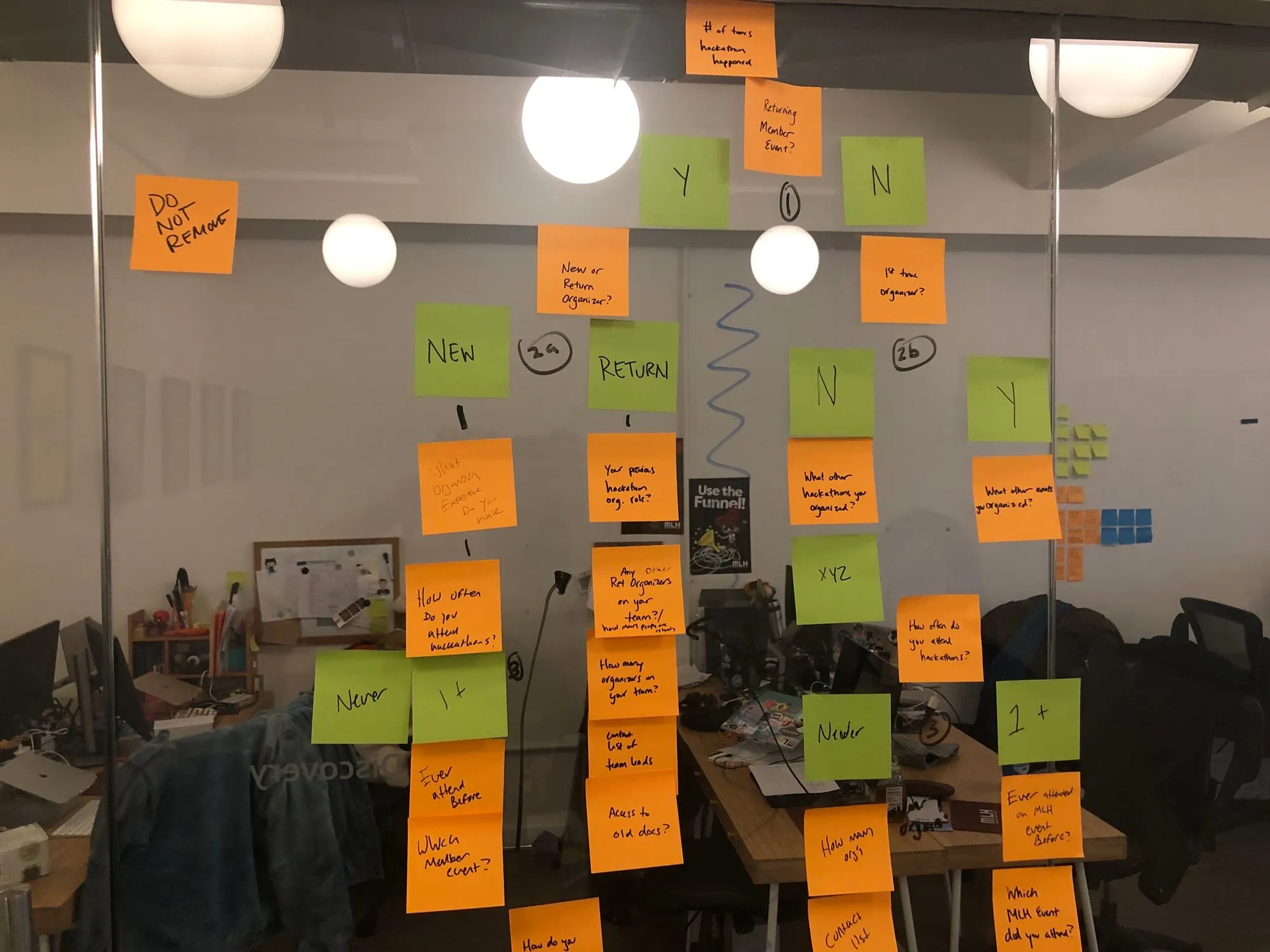
Designing the flow. Before touching any tool, we mapped the application on a glass wall with sticky notes. Who is taking this survey? What do they have in common? What information do we actually need, in what order, and how do we filter respondents, starting with whether they’re a new or returning organizer?
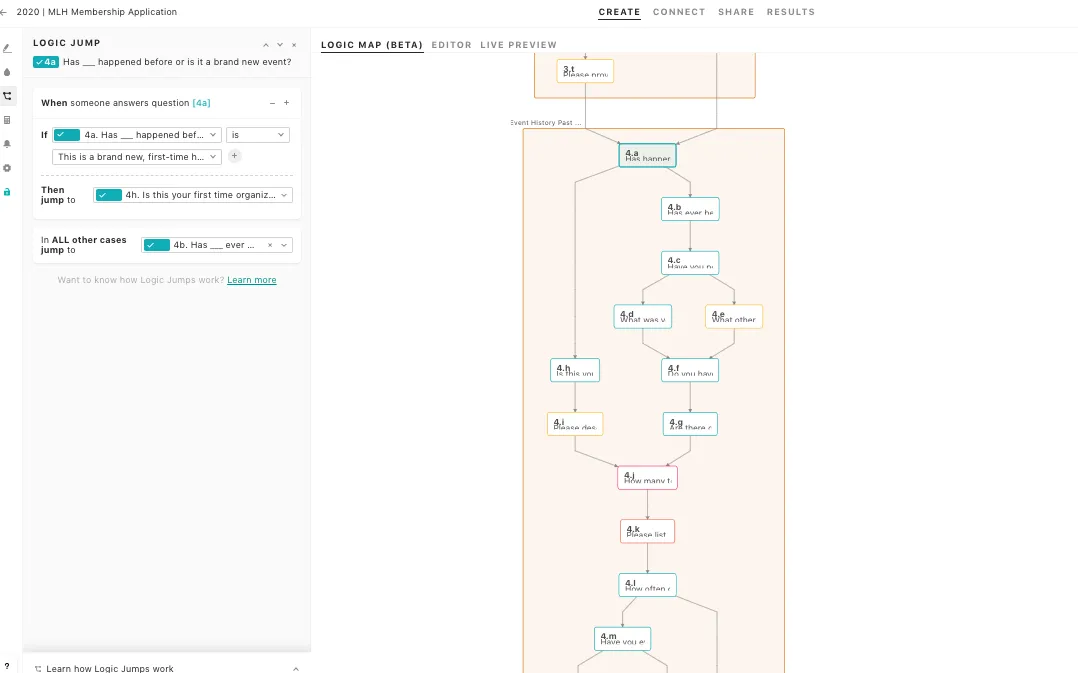
Building it in Typeform. I translated the wall into Typeform with logic jumps, so each applicant only saw the questions that applied to their event and history.
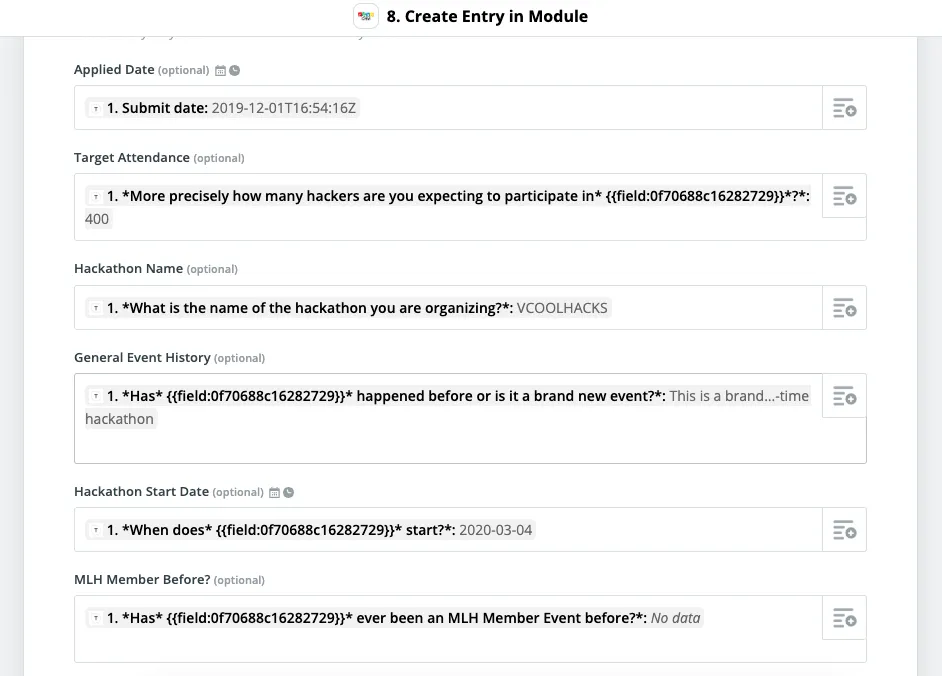
Connecting it to the CRM. Zapier then mapped every answer into Zoho CRM. That meant matching each question’s unique ID to the right CRM field, converting different question types into formats the CRM accepted, and running multiple tests to cover the combinations of answers and edge cases.
What changed. The application generated 1,000+ new applications, gave admins and applicants a much smoother experience, and boosted student recruitment, with no one copying forms into the database.
Everyday automations
I use the same habits on my own work:
- Drive inventory. A Google Apps Script that walks through a Google Drive folder and its subfolders and writes every file, link and date into a spreadsheet.
- Inbox clean-up. A Gmail script that automatically archives newsletter-labelled threads once they’re more than two days old.
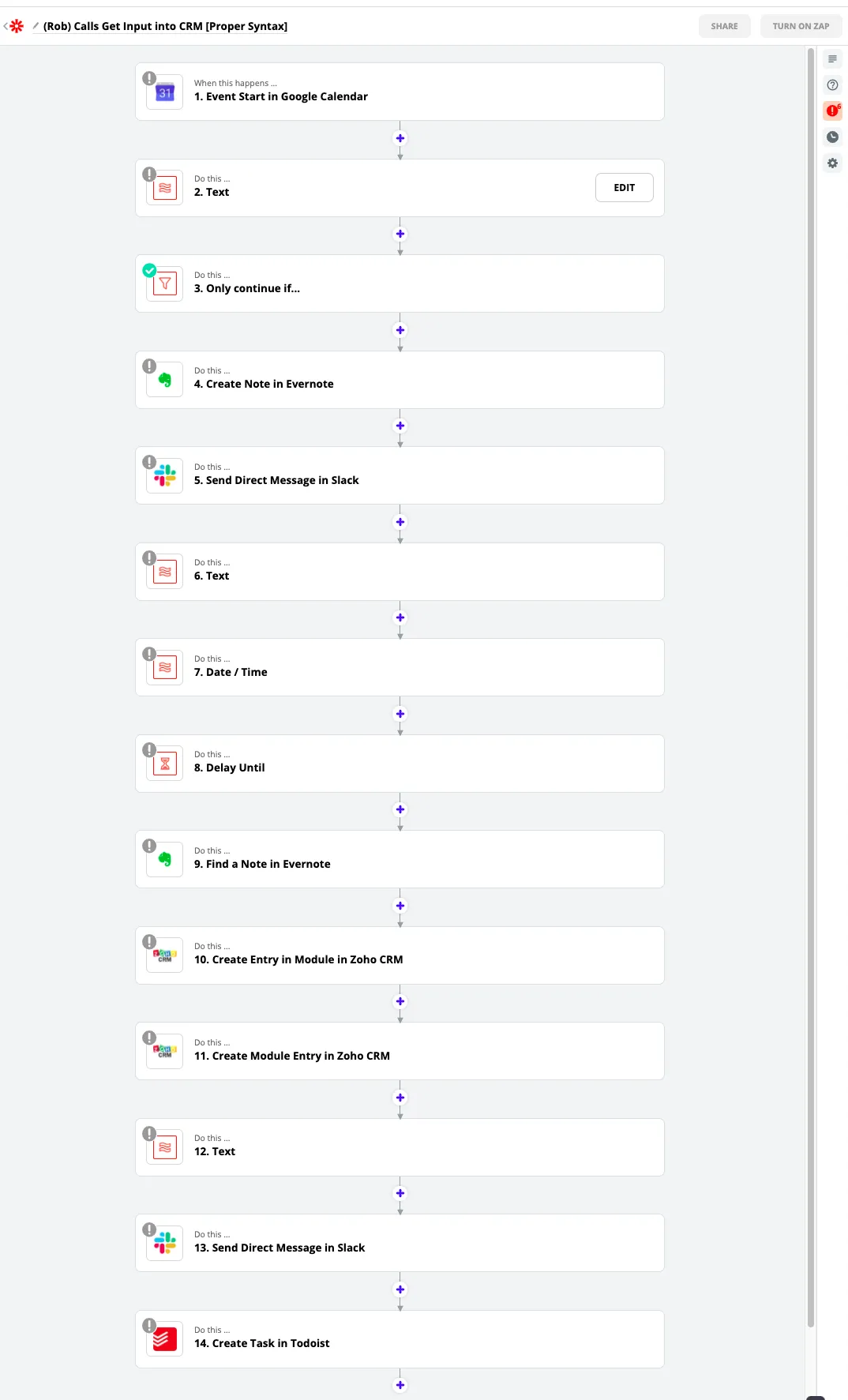
- A 14-step meeting workflow in Zapier. It reads a meeting request from an email, books it on my calendar with buffer time before and after the call for notes, then creates and finds the notes in Evernote, messages me in Slack, logs the conversation in Zoho CRM and creates the follow-up task in Todoist.
At larger scale
- Certificates around the world (Google). A Google Apps Script mail merge that generated personalized certificates from a spreadsheet and emailed them to community organizers worldwide.
- Connecting data without custom code. Zoho Dataflow to move data between sources, so we didn’t need a custom script for every sync.
- A booking app with a front door (Megashift). Megashift Office Hours, a Google Apps Script app that screens requests by budget and fit, schedules the right calls and routes everything else to peer sessions, with 42 passing tests.
The decks
- Building Survey Automations for Major League Hacking, 2020 (PDF, 11 slides)
- Some Key Automations (PDF, 5 slides)
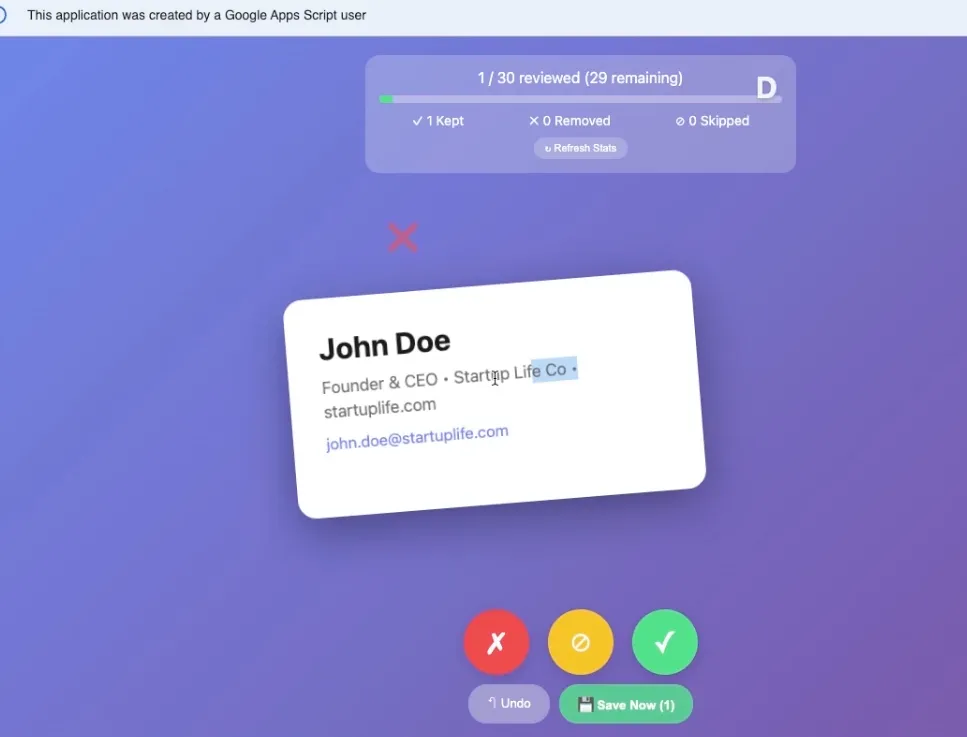
Then and now
The tools have changed. It was Zapier and Apps Script then; it’s AI agents and Claude Code now. The instinct hasn’t: find the repetitive work, decide what’s worth building, and make it run without you. Newer examples include a Tinder-style contacts swiper in Apps Script and a snippet that fixed 157 calendar events in 10 seconds.